+86 13012999975
- English
- Chinese
- French
- German
- Portuguese
- Spanish
- Russian
- Japanese
- Korean
- Arabic
- Irish
- Greek
- Turkish
- Italian
- Danish
- Romanian
- Indonesian
- Czech
- Afrikaans
- Swedish
- Polish
- Catalan
- Esperanto
- Hindi
- Lao
- Albanian
- Amharic
- Armenian
- Azerbaijani
- Belarusian
- Bengali
- Bosnian
- Bulgarian
- Cebuano
- Chichewa
- Corsican
- Croatian
- Dutch
- Estonian
- Filipino
- Finnish
- Frisian
- Galician
- Georgian
- Gujarati
- Haitian
- Hausa
- Hawaiian
- Hebrew
- Hmong
- Hungarian
- Icelandic
- Igbo
- Javanese
- Kannada
- Kazakh
- Khmer
- Kurdish
- Kyrgyz
- Latin
- Latvian
- Lithuanian
- Luxembou..
- Macedonian
- Malagasy
- Malay
- Malayalam
- Maltese
- Maori
- Marathi
- Mongolian
- Burmese
- Nepali
- Norwegian
- Pashto
- Persian
- Punjabi
- Serbian
- Sesotho
- Sinhala
- Slovak
- Slovenian
- Somali
- Samoan
- Scots Gaelic
- Shona
- Sindhi
- Sundanese
- Swahili
- Tajik
- Tamil
- Telugu
- Thai
- Ukrainian
- Urdu
- Uzbek
- Vietnamese
- Welsh
- Xhosa
- Yiddish
- Yoruba
- Zulu
- Kinyarwanda
- Tatar
- Oriya
- Turkmen
- Uyghur

Driven by the Dual Forces of Technological Innovation and Green Initiatives, Maintenance-Free Lead-Acid Batteries Embark on a New Journey of High-Quality Development
2026-04-23
Amidst the landscape of diversified competition within the new energy storage market, maintenance-free lead-acid batteries (specifically, valve-regulated sealed lead-acid batteries)—leveraging core advantages such as controllable costs, high safety, mature technology, and a robust recycling infrastructure—have not been entirely displaced by emerging battery technologies. On the contrary, through continuous technological iteration and industrial upgrading, they have solidified their foundations in critical sectors including telecommunications, data centers, UPS systems, rail transit, and new energy support infrastructure. Consequently, the market is now exhibiting a brand-new trajectory characterized by robust recovery, structural optimization, and high-quality development.
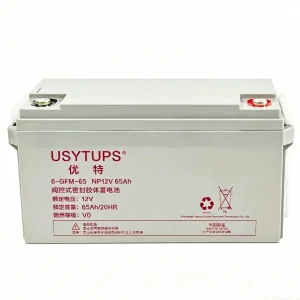
I. Industrial Upgrading: Policy Regulations Lead the Way, Industry Concentration Continues to Rise
In 2026, with the in-depth implementation of the *Normative Conditions for the Lead-Acid Battery Industry (2025 Revised Edition)*, the industry's energy consumption limit per unit of product will be strictly lowered to below 3.8 kg of standard coal per kilowatt-hour. This measure will accelerate the elimination of obsolete production capacity, driving approximately **18%** of small-to-medium-scale production facilities out of the market. As a result, industry concentration will rise significantly; the CR10 ratio (the combined market share of the top ten enterprises) is projected to climb to 85.6%. This trend will consolidate a leading echelon—centered around key players such as Tianneng, Chilwee, Narada Power, Leoch International, and Shuangdeng Group—that establishes formidable competitive barriers through the integration of intelligent manufacturing and closed-loop systems for recycled lead.
Concurrently, the new national recommended standards—GB/T 22199.1-2025 and GB/T 46736-2025—are scheduled to officially take effect on May 1, 2026. These standards impose more stringent requirements on core performance metrics for lead-acid batteries, including capacity consistency, cycle life, safety protection, and high/low-temperature performance. This move will further compel enterprises to upgrade their technologies, driving the industry to pivot from a strategy of "scale expansion" to one of "winning through quality," thereby fostering a fair and competitive market environment for high-quality products. II. Technological Breakthroughs: Long
II.Lifespan and High Efficiency—Breaking Through Traditional Performance Bottlenecks
In the face of market competition from lithium-ion and sodium-ion batteries, the maintenance-free lead-acid battery industry has achieved multiple key technological breakthroughs through material innovation and process optimization, thereby comprehensively enhancing product competitiveness:
Large-scale Commercialization of Lead-Carbon Technology: By incorporating carbon materials into the negative electrode, sulfation of the negative plate is effectively inhibited. Under conditions of 80% Depth of Discharge (DOD), cycle life has surged significantly to over 1,800 cycles; certain hybrid lead-carbon systems have even surpassed 4,500 cycles. In energy storage and frequency regulation applications, the cost per kilowatt-hour has dropped by 18.6% compared to traditional products, making them the preferred choice for long-duration energy storage scenarios.
Maturity of Gel Electrolyte (GEL) Technology: By utilizing silica-based gels to solidify the electrolyte, acid stratification is suppressed, and high-temperature resistance is significantly enhanced. In high-temperature environments of 40°C, capacity retention rates have improved by approximately 15%, making these batteries widely suitable for communication base stations, edge computing nodes, and specialized outdoor equipment in tropical regions.
Innovation in High-Corrosion-Resistance Grids:The adoption of lead-calcium-tin-aluminum alloy grids—reinforced with nanocrystals and doped with rare earth elements (tin/silver)—has boosted corrosion resistance by 40%. Consequently, float-charge lifetimes have generally extended to 12–15 years, satisfying the requirement for over 10 years of maintenance-free operation in communication base stations and data centers.
Empowerment through Intelligent Manufacturing:The widespread adoption of fully automated grid punching, plate casting, and assembly processes has dramatically improved product consistency while reducing defect rates by 30%. Furthermore, the integration of built-in BMS (Battery Management System) intelligent management systems enables real-time monitoring of voltage, current, temperature, and internal resistance, along with remote alarm capabilities, thereby boosting operation and maintenance efficiency by 50%.
III. Resurgence in Applications: Safety as the Core Priority—Returning Demand in Key Sectors
In recent years, a series of safety incidents involving energy storage systems has prompted industry-wide reflection. Consequently, the inherent characteristics of maintenance-free lead-acid batteries—specifically their use of aqueous electrolytes, intrinsic safety, and zero risk of fire or explosion—have once again come to the fore. As a result, core application sectors are now witnessing a resurgence in demand and a trend of steady growth:
Communication Base Stations: Driven by the large-scale rollout of 5G base stations, centralized procurement activities by operators—such as China Tower—continue to show signs of recovery. Among the 5G base stations newly constructed in 2025, **92% will utilize high-temperature-resistant, maintenance-free lead-acid batteries.** Their exceptional cold-start capability at -30°C and high-temperature tolerance up to 70°C make them perfectly suited for regions with extreme climates, such as Northwest China and Hainan.
Data Center (IDC) UPS: Driven by safety considerations, mainstream data centers globally are once again favoring lead-acid batteries for their backup power systems. In high-power UPS systems exceeding 60 kVA, lead-acid batteries account for over 65% of installations, thanks to their advantages in stable high-current discharge, high reliability, and low total lifecycle costs.
New Energy Storage and Backup Power: In the fields of residential solar storage, microgrids, and emergency disaster preparedness, lead-acid batteries dominate the market, largely due to a cost advantage of approximately 70%. By 2025, the demand growth rate in the industrial and energy storage sectors is projected to exceed 12%, establishing these areas as new engines for industry growth.
Specialized and Transportation Sectors:These batteries are widely applied in railway signaling systems, marine backup power, medical equipment, and AGVs (Automated Guided Vehicles). In the market for low-voltage auxiliary power supplies in hybrid vehicles, the market share of lead-acid batteries remains stable at over **65%**.
IV. Green Closed Loop: Environmental Protection Across the Entire Lifecycle, Fulfilling "Dual Carbon" Commitments
Maintenance-free lead-acid batteries currently boast the highest recycling rate among all energy storage products globally. The industry has successfully established a comprehensive closed-loop system encompassing both green manufacturing and efficient recycling:
Clean Production: Leading manufacturing facilities have optimized their processes to keep lead dust concentrations far below national standards, achieving near-zero emissions. At some production bases, green electricity accounts for up to 60% of energy consumption, while energy consumption per unit of product continues to decline.
Ultra-High Recycling Rates:Supported by a mature recycling network, the lead recovery rate reaches an impressive 99.5%. Recycled lead now constitutes over 60% of raw materials used in production—a process that generates 65% fewer emissions compared to primary lead production—resulting in a carbon footprint significantly superior to that of other battery technologies.
Compliant Traceability: Starting in April 2026, the industry will fully implement a **"One Battery, One Code"** traceability management system. This system covers the entire lifecycle—from production, sales, and usage to recycling—thereby eliminating the risk of heavy metal contamination at the source. V. Outlook: Steady Progress and Continued Leadership in Niche Segments
The global market for maintenance-free lead-acid batteries reached a size of $52.04 billion in 2025 and is projected to grow to $61.3 billion by 2032, maintaining a steady compound annual growth rate (CAGR) of 2.4%. Moving forward, maintenance-free lead-acid batteries will continue to deepen their focus on specialized sectors—such as safety-critical applications, long-life backup power systems, and low-cost energy storage—leveraging their comprehensive advantages in technological maturity, cost-effectiveness, safety, reliability, and robust recycling infrastructure. This strategic positioning will foster an industry landscape characterized by differentiated complementarity and long-term coexistence alongside lithium-ion and sodium-ion battery technologies.
Our company will remain steadfast in its focus on three core technological pathways—lead-carbon, gel, and long-life AGM—to introduce a comprehensive product portfolio tailored to the specific needs of telecommunications, data centers, UPS systems, and new energy storage applications. Through solutions that are safer, longer-lasting, more eco-friendly, and more intelligent, we are committed to providing stable and reliable power assurance for critical infrastructure worldwide.