+86 13012999975
- English
- Chinese
- French
- German
- Portuguese
- Spanish
- Russian
- Japanese
- Korean
- Arabic
- Irish
- Greek
- Turkish
- Italian
- Danish
- Romanian
- Indonesian
- Czech
- Afrikaans
- Swedish
- Polish
- Basque
- Catalan
- Esperanto
- Hindi
- Lao
- Albanian
- Amharic
- Armenian
- Azerbaijani
- Belarusian
- Bengali
- Bosnian
- Bulgarian
- Cebuano
- Chichewa
- Corsican
- Croatian
- Dutch
- Estonian
- Filipino
- Finnish
- Frisian
- Galician
- Georgian
- Gujarati
- Hausa
- Hawaiian
- Hebrew
- Hmong
- Hungarian
- Icelandic
- Igbo
- Javanese
- Kannada
- Kazakh
- Khmer
- Kurdish
- Kyrgyz
- Latin
- Latvian
- Lithuanian
- Luxembou..
- Macedonian
- Malagasy
- Malay
- Malayalam
- Maltese
- Maori
- Marathi
- Mongolian
- Burmese
- Nepali
- Norwegian
- Pashto
- Persian
- Punjabi
- Serbian
- Sesotho
- Sinhala
- Slovak
- Slovenian
- Somali
- Samoan
- Scots Gaelic
- Shona
- Sindhi
- Sundanese
- Swahili
- Tajik
- Tamil
- Telugu
- Thai
- Ukrainian
- Urdu
- Uzbek
- Vietnamese
- Welsh
- Xhosa
- Yiddish
- Yoruba
- Zulu
- Kinyarwanda
- Tatar
- Oriya
- Turkmen
- Uyghur

What Is an Uninterruptible Power Supply Used For?
2026-10-08
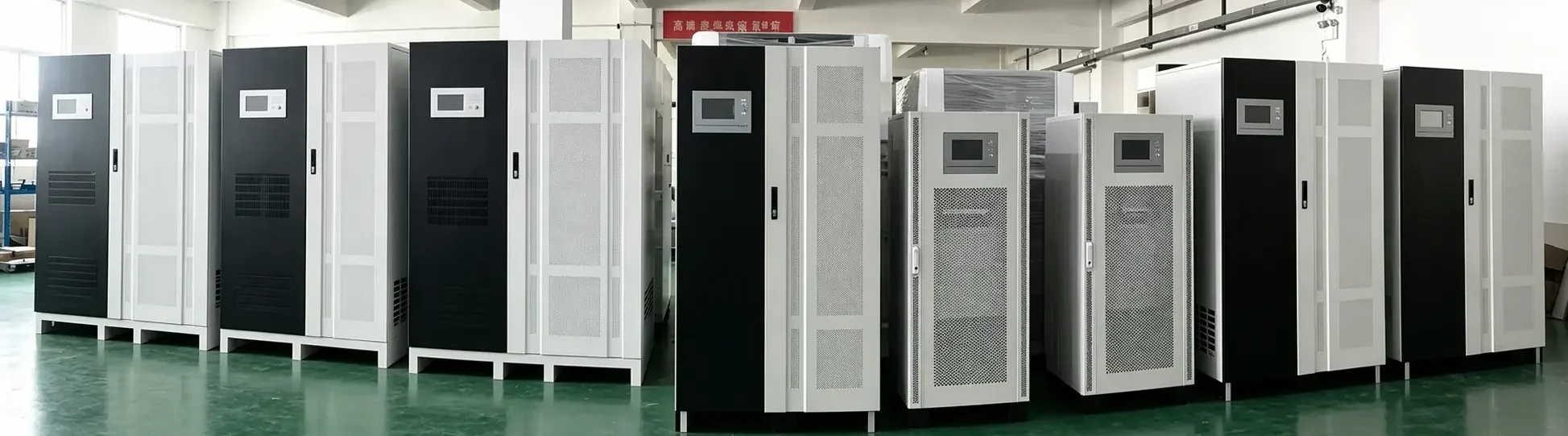
An uninterruptible power supply (UPS) is used to provide temporary, stable backup power when the normal utility supply fails or becomes unstable. It helps connected equipment continue operating during outages, voltage drops, surges, frequency fluctuations, and other power-quality problems.
A UPS is commonly used to protect computers, servers, networking equipment, security systems, medical devices, industrial control systems, telecommunications equipment, and other loads that cannot tolerate an unexpected shutdown. Depending on the UPS type, battery capacity, and connected load, it can provide enough runtime to save data, complete a controlled shutdown, switch to a generator, or keep critical operations running until normal power returns.
Why is a UPS important?
Power interruptions are not always long, but even a short disturbance can create serious consequences. A sudden shutdown may cause lost files, damaged operating systems, interrupted production, communication failures, or unnecessary equipment stress.
A UPS supports business continuity by providing power within milliseconds—or with no transfer time in many online UPS systems. It can also help improve the quality of power delivered to sensitive equipment.
Key benefits include:
- Preventing data loss during a power outage
- Keeping servers and network devices online
- Supporting safe system shutdown procedures
- Protecting sensitive electronics from unstable voltage
- Maintaining security, monitoring, and communication systems
- Reducing downtime in industrial and commercial operations
What equipment can use a UPS?
An uninterruptible power supply application can range from a small office workstation to a large facility with multiple critical power loads. The right UPS depends on the equipment’s power demand, required runtime, voltage requirements, and tolerance for power disturbances.
Computers and office equipment
Desktop computers, workstations, monitors, routers, and storage devices can lose data when power fails unexpectedly. A small UPS provides enough backup time for users to save work and shut down equipment correctly.
For offices that depend on internet access, a UPS can also keep modems, routers, switches, and VoIP phones running during a short outage.
Servers and data centers
Servers, storage arrays, switches, firewalls, and other IT infrastructure need continuous, clean power. A UPS helps prevent service interruptions, data corruption, and hardware issues caused by abrupt shutdowns.
For data centers and server rooms, online double-conversion UPS systems are often preferred because they provide a consistent output supply and stronger protection against voltage and frequency variations. The UPS may also bridge the gap between utility failure and generator startup.
Network and telecommunications equipment
Communication systems depend on stable power. UPS systems are widely used for network cabinets, telecom base stations, communication rooms, control centers, and broadcasting equipment.
A power interruption can disconnect users, interrupt remote monitoring, or affect business operations. Backup power helps maintain connectivity while the main power source is restored.
Security and surveillance systems
Security equipment often needs to remain active during an outage. A UPS can support CCTV cameras, access-control systems, alarm panels, recording equipment, and network video recorders.
This is especially important for warehouses, offices, factories, retail locations, and other sites where security must continue operating when utility power is unavailable.
Medical and healthcare equipment
Hospitals, clinics, laboratories, and diagnostic facilities use UPS systems to support equipment that requires reliable power. Depending on the application, a UPS may protect monitoring systems, laboratory instruments, information systems, imaging support equipment, and communication devices.
The UPS must be selected carefully for medical environments. Load characteristics, safety requirements, regulations, installation conditions, and manufacturer guidance should all be reviewed by qualified professionals.
Industrial automation and manufacturing
Factories often use UPS systems for programmable logic controllers (PLCs), human-machine interfaces (HMIs), industrial PCs, automation cabinets, sensors, robotics controls, and production monitoring systems.
An unexpected power interruption can stop a production line, damage work in process, create restart delays, or affect process data. A properly sized industrial UPS can maintain control power long enough for a controlled stop or for standby generation to take over.
Retail, banking, and point-of-sale systems
Retail stores, banks, restaurants, and service businesses depend on point-of-sale terminals, payment systems, barcode scanners, network devices, and receipt printers. A UPS helps keep essential transactions and communications available during short outages.
For businesses that rely on digital payments, even a brief loss of power can affect customer service and revenue.
How does a UPS work?
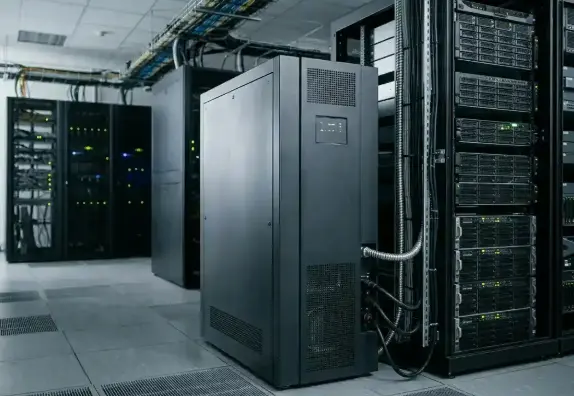
A UPS system stores electrical energy in batteries and automatically supplies that energy when utility power becomes unavailable or unacceptable.
Under normal operating conditions, the UPS receives utility power and provides output power to connected equipment. It may also charge its internal or external battery bank. If the input supply fails, the UPS switches to battery power.
The exact operating method depends on the UPS topology.
| UPS Type | Typical Use | Main Characteristic |
|---|---|---|
| Standby UPS | Home offices, basic PCs, small devices | Switches to battery during an outage |
| Line-Interactive UPS | Small servers, network equipment, office systems | Helps regulate moderate voltage fluctuations |
| Online Double-Conversion UPS | Data centers, medical, industrial, and critical loads | Delivers highly stable power with continuous conversion |
Does a UPS protect against power surges and low voltage?
A UPS can provide protection against more than a complete outage, but the level of protection depends on the model and topology.
Many UPS systems can help manage:
- Power outages
- Brownouts and undervoltage conditions
- Overvoltage conditions
- Voltage sags and surges
- Electrical noise
- Frequency instability
- Short-duration power interruptions
However, a UPS should not be treated as a replacement for a complete electrical protection strategy. Proper grounding, circuit protection, surge protection devices, and professional electrical installation remain important.
How long can a UPS run during a power outage?
UPS runtime depends on several factors:
- Total connected load in watts or kilowatts
- UPS power rating
- Battery capacity and condition
- Number of battery strings or external battery cabinets
- Battery age
- Ambient temperature
- Required shutdown reserve
A lightly loaded UPS will generally provide more runtime than a heavily loaded one. For example, a UPS designed only for a few minutes of backup may be sufficient for safe shutdown, while a larger system with external batteries may support critical loads for much longer.
When planning an uninterruptible power supply application, it is important to calculate actual load demand rather than selecting a system based only on its VA rating. The watt rating, power factor, startup current, battery autonomy target, and future expansion should all be considered.
How do you choose the right UPS?
Choosing a UPS involves more than selecting the largest capacity available. A suitable system should match the load, site conditions, protection requirements, and operational goals.
Consider the following before purchasing:
- Load capacity: Add the wattage of all equipment that will be connected, then allow reasonable capacity for growth.
- Required runtime: Decide whether the UPS only needs to support safe shutdown or keep equipment running until generator power is available.
- UPS topology: Choose standby, line-interactive, or online double-conversion protection based on load sensitivity and site power quality.
- Input and output requirements: Confirm voltage, phase, frequency, plug type, and distribution needs.
- Battery configuration: Evaluate internal batteries, external battery packs, replacement availability, and maintenance needs.
- Installation environment: Consider temperature, ventilation, dust, humidity, rack or tower installation, and available space.
- Monitoring and communication: Network cards, remote monitoring, alarms, and shutdown software can improve operational visibility.
- Service and lifecycle cost: Review warranty, maintenance support, battery replacement planning, and long-term operating costs.
UPS maintenance matters
A UPS is only reliable when it is maintained properly. Batteries naturally age, and poor operating conditions can reduce their service life.
Basic UPS maintenance may include regular visual checks, alarm review, battery testing, load verification, ventilation inspection, firmware review where applicable, and planned battery replacement. Larger systems may require professional preventive maintenance and periodic performance testing.
It is also important not to overload the UPS or connect equipment that exceeds its intended use. Motors, compressors, laser printers, and other high-inrush loads may require special evaluation before connection.
Conclusion
An uninterruptible power supply is used to keep essential equipment protected and operating when normal utility power is interrupted or unstable. From office computers and networking equipment to industrial controls, medical systems, security devices, and data-center infrastructure, a UPS provides critical time for continued operation, safe shutdown, or generator transfer.
The best uninterruptible power supply application depends on the actual load, required backup time, power environment, and level of protection needed. Selecting the correct UPS topology and capacity helps reduce downtime, protect equipment, and support more reliable operations.
For help selecting a UPS solution for your equipment and operating conditions, please contact our team.
FAQ
What is the main purpose of a UPS?
The main purpose of a UPS is to provide temporary backup power and protect connected equipment from outages and unstable power conditions.
Can a UPS keep equipment running during a blackout?
Yes. A UPS can keep equipment running for a limited time, depending on battery capacity and connected load. It may support continued operation, controlled shutdown, or generator transfer.
Is a UPS the same as a generator?
No. A UPS provides immediate short-term power from batteries, while a generator produces power for longer periods after it starts. Many critical facilities use both together.
Can I connect all equipment to one UPS?
Only if the UPS has sufficient capacity and is suitable for the connected equipment. Calculate the total load, startup current, runtime target, and installation requirements before connection.