+86 13012999975
- English
- Chinese
- French
- German
- Portuguese
- Spanish
- Russian
- Japanese
- Korean
- Arabic
- Irish
- Greek
- Turkish
- Italian
- Danish
- Romanian
- Indonesian
- Czech
- Afrikaans
- Swedish
- Polish
- Basque
- Catalan
- Esperanto
- Hindi
- Lao
- Albanian
- Amharic
- Armenian
- Azerbaijani
- Belarusian
- Bengali
- Bosnian
- Bulgarian
- Cebuano
- Chichewa
- Corsican
- Croatian
- Dutch
- Estonian
- Filipino
- Finnish
- Frisian
- Galician
- Georgian
- Gujarati
- Hausa
- Hawaiian
- Hebrew
- Hmong
- Hungarian
- Icelandic
- Igbo
- Javanese
- Kannada
- Kazakh
- Khmer
- Kurdish
- Kyrgyz
- Latin
- Latvian
- Lithuanian
- Luxembou..
- Macedonian
- Malagasy
- Malay
- Malayalam
- Maltese
- Maori
- Marathi
- Mongolian
- Burmese
- Nepali
- Norwegian
- Pashto
- Persian
- Punjabi
- Serbian
- Sesotho
- Sinhala
- Slovak
- Slovenian
- Somali
- Samoan
- Scots Gaelic
- Shona
- Sindhi
- Sundanese
- Swahili
- Tajik
- Tamil
- Telugu
- Thai
- Ukrainian
- Urdu
- Uzbek
- Vietnamese
- Welsh
- Xhosa
- Yiddish
- Yoruba
- Zulu
- Kinyarwanda
- Tatar
- Oriya
- Turkmen
- Uyghur

AI-Powered, Green, and Streamlined — Micro-Module Data Centers Reshape the New Ecosystem of Computing Infrastructure
2026-04-23
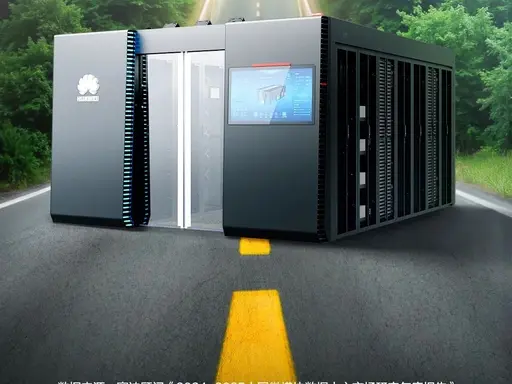
By 2026, driven by the explosive growth of large-scale AI models, the widespread adoption of edge computing, and the deepening implementation of the "Eastern Data, Western Computing" initiative, data center construction is undergoing a revolutionary transformation. Leveraging core advantages such as rapid deployment, elastic scalability, intelligent efficiency, and eco-friendly low-carbon operation, micro-module data centers are completely upending traditional data center models. They have emerged as the preferred mainstream solution for building small-to-medium-sized data centers, intelligent computing edge nodes, and enterprise computing hubs—propelling digital infrastructure into a brand-new "plug-and-play" era.
I. Market Boom: Surpassing the 10 Billion Mark to Become the Mainstream of Computing Infrastructure
Industry reports indicate that by 2026, the market size for micro-module data centers in China is projected to exceed 10 billion RMB, boasting a Compound Annual Growth Rate (CAGR) as high as 14.6%. Driven by the dual forces of "Dual Carbon" goals (carbon peaking and carbon neutrality) and surging computing demand, their application scenarios are expanding across the board:
Core Scenarios: AI intelligent computing centers, medium-sized IDCs, enterprise headquarters data rooms, and critical business nodes for finance, government, and healthcare sectors.
Edge Scenarios: Low-latency-critical environments such as 5G base stations, smart factories, vehicle-road collaboration systems, and telemedicine facilities.
Highlighting Key Advantages: Compared to traditional data centers, micro-modules shorten the construction cycle by 50%–60% (reducing it from 18 months to just 6–8 months), lower the 10-year Total Cost of Ownership (TCO) by 5%–10%, and reduce initial capital expenditure by 40%. They effectively resolve the three major pain points historically associated with data center construction: "high investment, long cycles, and difficult expansion."
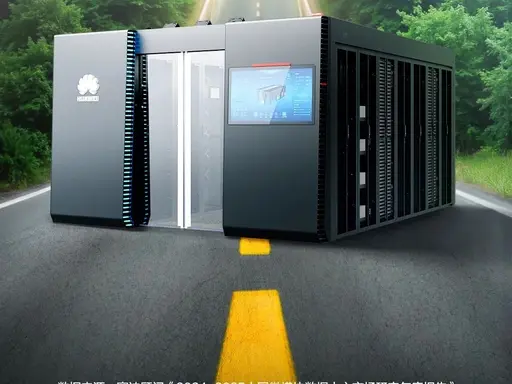
II. Technological Innovation: Full-Stack Integration Leading to New Heights of Efficiency and Intelligence
1. Integrated Design, Factory Pre-fabrication, and Rapid Delivery
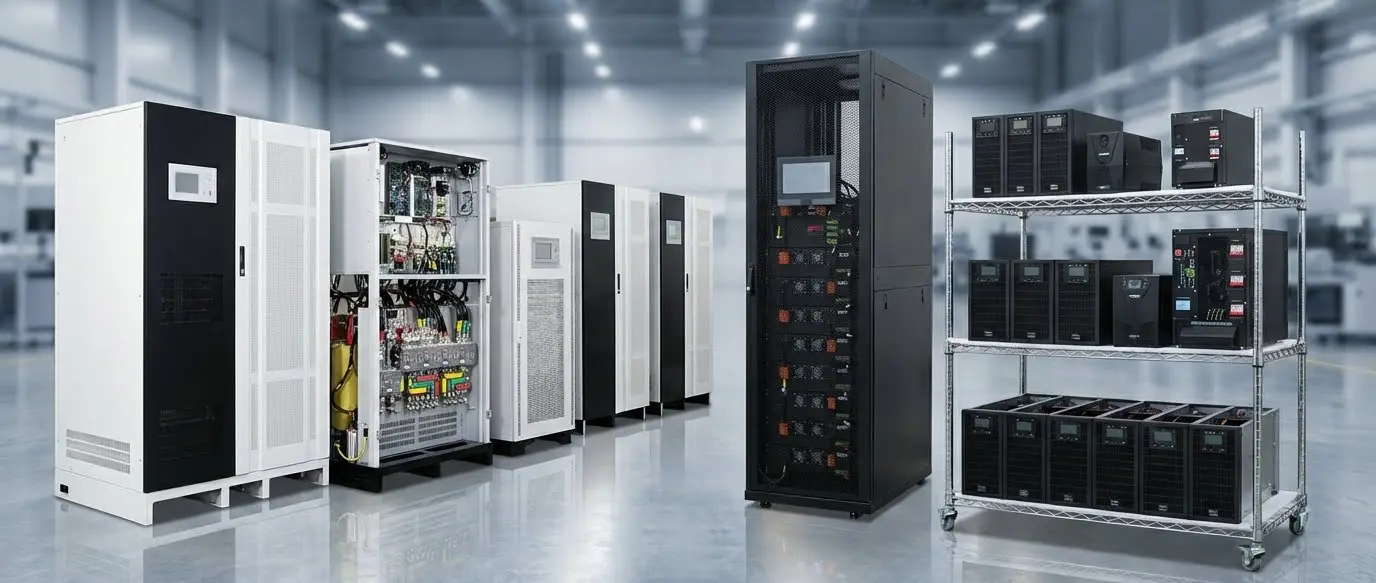
Full-System Convergence: Seven major systems—cabinets, power supply and distribution, modular UPS, precision cooling, cabling, fire suppression, and DCIM monitoring—are highly integrated into a single standard module.
Pre-fabricated Production: 80% of the assembly and testing are completed at the factory; on-site work requires only module splicing and power connection. This enables rapid commissioning within 8–16 weeks, supporting a "grow-as-you-invest" expansion strategy.
2. High-Density Power Supply: Adapting to the AI Compute Wave
High-Density Adaptation: Power density per cabinet is boosted to 20–50 kW, effortlessly meeting the high power consumption demands of AI servers.
High-Efficiency Power Delivery: Employs modular UPS and flexible busbar technologies to achieve an efficiency rating of up to 97% with a Total Harmonic Distortion (THDi) of less than 3%, while also supporting the integration of green solar power.
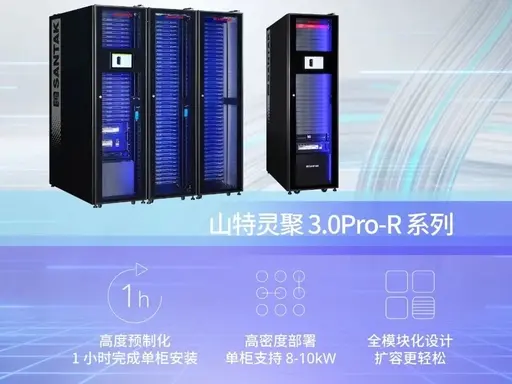
3. Precision Cooling: Green, Energy-Efficient, and Setting New PUE Lows
Cascaded Thermal Control: Combines hot/cold aisle containment, row-level near-end cooling, and refrigerant pump-assisted free cooling technologies to fully leverage outdoor cold sources, resulting in energy savings of over 40%.
Widespread Liquid Cooling Adoption: Tailored for supercomputing environments, commercialized cold-plate and immersion liquid cooling technologies drive PUE levels down to 1.15–1.25, fully complying with stringent national energy efficiency standards.
4. AI-Powered Intelligent O&M: From Passive Response to Proactive Prediction
Intelligent Core: Features a built-in DCIM system that utilizes AI algorithms for real-time monitoring, analysis, and automated optimization—enabling fault prediction, energy consumption optimization, and capacity management.
Simplified O&M: Supports 3D visualization, U-space asset identification, and remote management via mobile apps; enables 24/7 unattended operation, reducing O&M costs by 30%.
III. Deepening Application Scenarios: Industry-Wide Coverage to Build a Solid Digital Foundation
AI Intelligent Compute Centers:High-density, high-efficiency, and rapidly deployable solutions that support large-scale model training and inference, ensuring compute stability with zero downtime.
Enterprise Digital Transformation:Standardized, cost-effective solutions for rapidly establishing dedicated compute platforms that empower the entire workflow—spanning office operations, manufacturing, and R&D.
Edge Computing Nodes: Compact in size and highly adaptable to diverse environments, these nodes can be deployed at base stations, factories, and community hubs to deliver low-latency, high-reliability local computing capabilities.
Green and Low-Carbon Campuses: Deeply integrates solar power generation and energy storage systems to facilitate the consumption of green electricity; with a PUE of ≤1.25, these solutions easily pass energy conservation audits.
IV. Future Outlook: A Deep Evolution Toward Modularity, Intelligence, and Sustainability
Looking ahead, micro-module data centers will continue to evolve: architectures will become more standardized, components more intelligent, and energy efficiency pushed to even greater extremes. With the comprehensive integration of liquid cooling technology, AI-driven deep optimization, and multi-energy complementarity, micro-modules are evolving beyond mere server rooms to become intelligent computing units, seamlessly integrating into the unified "Source-Grid-Load-Storage" ecosystem. As a specialist in micro-module solutions, our company remains focused on technological innovation, offering a comprehensive suite of intelligent micro-module solutions—spanning single-cabinet, dual-row, and cold-aisle configurations. By deeply integrating lithium-ion UPS systems, liquid cooling, and AI-driven cloud management technologies, we provide various industries with rapid, reliable, green, and intelligent one-stop computing infrastructure solutions, working alongside you to build an efficient future for the digital economy.