+86 13012999975
- English
- Chinese
- French
- German
- Portuguese
- Spanish
- Russian
- Japanese
- Korean
- Arabic
- Irish
- Greek
- Turkish
- Italian
- Danish
- Romanian
- Indonesian
- Czech
- Afrikaans
- Swedish
- Polish
- Basque
- Catalan
- Esperanto
- Hindi
- Lao
- Albanian
- Amharic
- Armenian
- Azerbaijani
- Belarusian
- Bengali
- Bosnian
- Bulgarian
- Cebuano
- Chichewa
- Corsican
- Croatian
- Dutch
- Estonian
- Filipino
- Finnish
- Frisian
- Galician
- Georgian
- Gujarati
- Hausa
- Hawaiian
- Hebrew
- Hmong
- Hungarian
- Icelandic
- Igbo
- Javanese
- Kannada
- Kazakh
- Khmer
- Kurdish
- Kyrgyz
- Latin
- Latvian
- Lithuanian
- Luxembou..
- Macedonian
- Malagasy
- Malay
- Malayalam
- Maltese
- Maori
- Marathi
- Mongolian
- Burmese
- Nepali
- Norwegian
- Pashto
- Persian
- Punjabi
- Serbian
- Sesotho
- Sinhala
- Slovak
- Slovenian
- Somali
- Samoan
- Scots Gaelic
- Shona
- Sindhi
- Sundanese
- Swahili
- Tajik
- Tamil
- Telugu
- Thai
- Ukrainian
- Urdu
- Uzbek
- Vietnamese
- Welsh
- Xhosa
- Yiddish
- Yoruba
- Zulu
- Kinyarwanda
- Tatar
- Oriya
- Turkmen
- Uyghur

Outdoor Portable Power Stations
2026-04-23
From Camping Essentials to the New Energy Favorite: The Industry Undergoes a Dual Upgrade in Safety and Innovation
In recent years, driven by a global surge in outdoor activities, rising demand for emergency preparedness, and the continued penetration of new energy technologies, outdoor portable power stations—compact energy storage devices that combine high capacity, multiple interfaces, portability, and safety—are evolving from niche camping gear into an indispensable "power necessity" for both general consumers and professional sectors. With rapid market expansion and accelerated technological iteration, the industry is advancing toward a new phase of high-quality development, guided by increasingly robust regulatory standards.
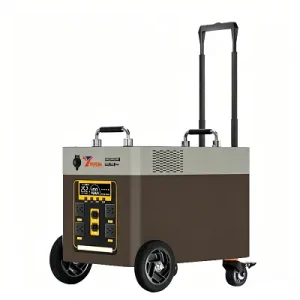
Technological Iteration: Safety as the Foundation; Intelligence and Efficiency Become the Mainstream
The outdoor portable power station industry is currently undergoing a phase of technological upgrading and structural optimization. Core breakthroughs are centering on four key pillars: safety, energy density, intelligence, and fast-charging capabilities.
Battery Technology: Lithium Iron Phosphate (LiFePO4) Takes the Lead, Marking a Leap in Safety Performance. Compared to traditional ternary lithium batteries, LiFePO4 batteries offer superior thermal stability, a cycle life exceeding 1,500 cycles, and moderate costs. By 2025, their market share is projected to reach 65%, as they gradually become the standard configuration for mid-to-high-end products. Concurrently, breakthroughs in low-temperature resistance technology have emerged; certain products now utilize intelligent heating systems to ensure stable power supply even in extreme environments as cold as -30°C, making them suitable for specialized applications such as polar scientific expeditions and border patrol missions.
Product Innovation: Lightweight Design, Modularity, and Multifunctional Integration. Leading brands continue to optimize product form factors; for instance, the new "Dian Xiao Er" 1100 Pro 2 model weighs just 10.8 kg—a 31% reduction from its predecessor—and supports intelligent parallel-connection for capacity expansion, thereby balancing portability with high-power output capabilities. The industry has also introduced split-unit designs that separate the battery pack from the inverter; in the event of a malfunction, only the core component requires repair, significantly reducing both the cost and complexity of after-sales service. Furthermore, high-capacity products have achieved power outputs exceeding 3,000 watts, enabling them to simultaneously power high-demand devices such as electric drills, refrigerators, and induction cooktops.
Intelligence and Fast Charging: APP Connectivity + Rapid Power Replenishment. Mid-to-high-end products are widely equipped with intelligent BMS (Battery Management Systems), enabling remote monitoring, parameter adjustment, and fault alerts via mobile apps. Thanks to breakthroughs in fast-charging technology, leading brands have reduced the 0–100% charging time to a mere 1.2–1.6 hours; furthermore, these systems are compatible with solar MPPT fast charging—achieving a charging efficiency of 95%—thereby realizing "sunlight as a power source" for off-grid electricity supply.