+86 13012999975
- English
- Chinese
- French
- German
- Portuguese
- Spanish
- Russian
- Japanese
- Korean
- Arabic
- Irish
- Greek
- Turkish
- Italian
- Danish
- Romanian
- Indonesian
- Czech
- Afrikaans
- Swedish
- Polish
- Catalan
- Esperanto
- Hindi
- Lao
- Albanian
- Amharic
- Armenian
- Azerbaijani
- Belarusian
- Bengali
- Bosnian
- Bulgarian
- Cebuano
- Chichewa
- Corsican
- Croatian
- Dutch
- Estonian
- Filipino
- Finnish
- Frisian
- Galician
- Georgian
- Gujarati
- Haitian
- Hausa
- Hawaiian
- Hebrew
- Hmong
- Hungarian
- Icelandic
- Igbo
- Javanese
- Kannada
- Kazakh
- Khmer
- Kurdish
- Kyrgyz
- Latin
- Latvian
- Lithuanian
- Luxembou..
- Macedonian
- Malagasy
- Malay
- Malayalam
- Maltese
- Maori
- Marathi
- Mongolian
- Burmese
- Nepali
- Norwegian
- Pashto
- Persian
- Punjabi
- Serbian
- Sesotho
- Sinhala
- Slovak
- Slovenian
- Somali
- Samoan
- Scots Gaelic
- Shona
- Sindhi
- Sundanese
- Swahili
- Tajik
- Tamil
- Telugu
- Thai
- Ukrainian
- Urdu
- Uzbek
- Vietnamese
- Welsh
- Xhosa
- Yiddish
- Yoruba
- Zulu
- Kinyarwanda
- Tatar
- Oriya
- Turkmen
- Uyghur

Which UPS Can Last for 24 Hours? Extended Runtime Guide
2026-09-23
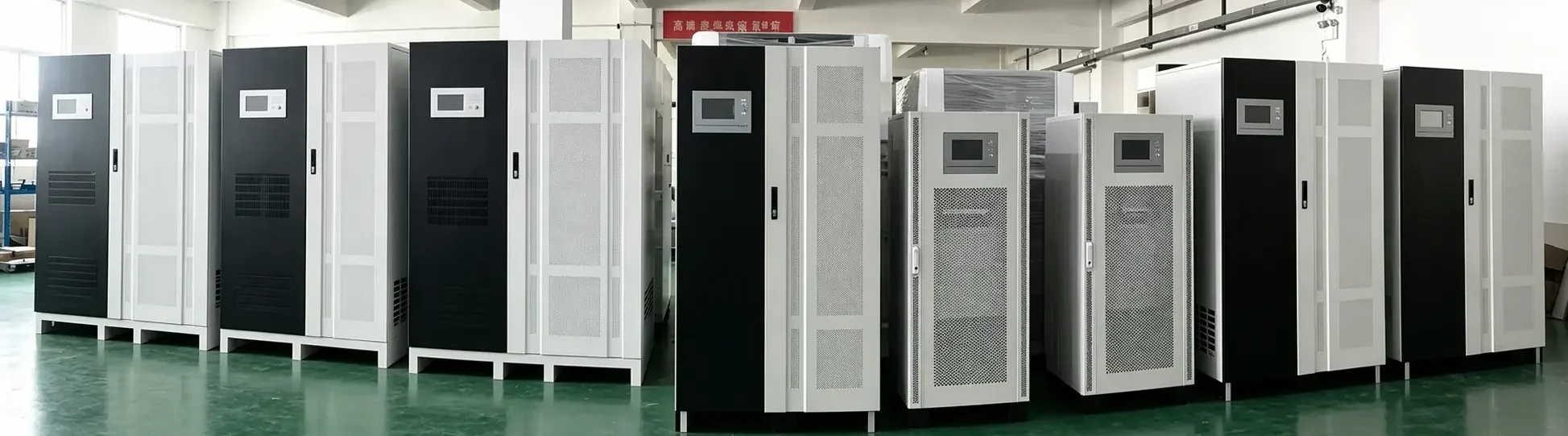
A UPS can last for 24 hours, but it is rarely a standard desktop UPS with only an internal battery. In most cases, a 24-hour backup solution requires a long-runtime UPS combined with correctly sized external battery cabinets or a dedicated battery bank.
The correct system depends on the actual load in watts, the required backup time, battery type, UPS efficiency, future expansion, and the level of power protection required. When planning uninterruptible power supply hours, the most important question is not simply, “Which UPS model lasts 24 hours?” It is, “What critical load must be supported for 24 hours?”
A system that supports a 100 W network device for one day will be very different from a system that supports a 2,000 W server load, medical device, production-control system, or telecommunications cabinet.
Can a Standard UPS Last for 24 Hours?
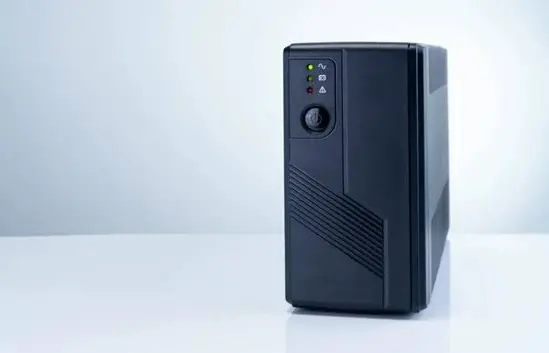
Most standard small UPS units are designed for short-term backup. Their typical role is to provide enough time for:
- Safe shutdown of computers and servers
- Protection against short utility interruptions
- Bridging power during generator startup
- Maintaining network equipment during brief outages
- Preventing data loss and sudden system shutdown
A standard UPS with internal batteries may provide minutes or a limited number of hours, depending on the load. It is generally not intended to provide full 24-hour runtime at medium or high load.
For 24-hour protection, users typically need a long-run UPS system that supports external battery cabinets, additional battery packs, or a custom battery-bank configuration approved for the UPS model.
What Type of UPS Can Run for 24 Hours?
The most suitable option is usually a long-runtime online UPS or a UPS specifically designed to connect with external batteries.
1. Long-runtime online UPS
An online UPS continuously converts incoming AC power to DC and then back to regulated AC output. This design is commonly selected for critical applications where stable output and strong power protection are important.
A long-runtime online UPS can be paired with external batteries to extend runtime from minutes to several hours or longer, depending on load and battery-bank size.
Typical applications include:
- Data rooms
- Server racks
- Telecommunications equipment
- Security systems
- Medical support equipment
- Industrial control systems
- Financial and retail systems
- Network communication cabinets
2. Rack-mounted UPS with external battery modules
For IT rooms and network racks, a rack-mounted UPS with compatible external battery modules can be a practical solution. This design helps users scale backup time while keeping equipment organized inside a standard rack environment.
The available runtime depends on the UPS rating, the connected load, and the number of approved external battery modules.
3. Tower UPS with battery cabinets
Tower UPS systems are often used in offices, commercial facilities, laboratories, industrial sites, and locations where rack installation is not required.
A tower UPS with external battery cabinets can support extended runtime when the cabinet voltage, battery quantity, charger capacity, and UPS compatibility are correctly matched.
4. UPS plus generator solution
For long utility outages, a UPS and generator combination is often more practical than relying on batteries alone.
In this configuration, the UPS provides immediate no-break power when the utility fails. The generator then starts and supports the load during a prolonged outage. The UPS helps bridge the transition and can protect sensitive equipment from unstable generator power.
For some facilities, this approach is more economical and easier to scale than installing a very large battery bank for 24-hour operation.
How Is 24-Hour UPS Runtime Calculated?
UPS runtime is not determined by VA rating alone. A proper calculation considers the real power consumption of the connected equipment, normally measured in watts.
A simplified planning concept is:
Estimated Runtime = Usable Battery Energy ÷ Actual Load
However, real-world runtime is affected by several additional factors:
- UPS efficiency
- Battery voltage
- Battery capacity
- Battery chemistry
- Number of battery strings
- Battery age
- Battery temperature
- Discharge rate
- Power factor
- Load changes during an outage
- Safety margin for future expansion
For this reason, runtime should be verified using the UPS manufacturer’s approved runtime table, configuration tool, or engineering calculation—not estimated from battery capacity alone.
Why Load Matters More Than UPS Size
A larger UPS does not automatically provide longer runtime. UPS power capacity and battery runtime are related, but they are not the same thing.
A 10 kVA UPS may support a much larger load than a 1 kVA UPS, but its runtime can still be short if the battery bank is small. Conversely, a lower-capacity UPS supporting a light load may provide long runtime when paired with enough external battery capacity.
When specifying uninterruptible power supply hours, buyers should identify:
| Requirement | Why It Matters |
|---|---|
| Total load in watts | Determines battery energy required |
| Peak load | Prevents overload during startup or operation |
| Required backup time | Defines battery-bank capacity |
| UPS output rating | Ensures the UPS can carry the load |
| Future load growth | Avoids undersizing the system |
| Input and output voltage | Confirms electrical compatibility |
| Battery type | Affects runtime, maintenance, and lifecycle planning |
| Installation location | Influences cabinet size, ventilation, and safety design |
| Generator availability | May reduce required battery runtime |
A properly sized UPS must support both the present load and reasonable future expansion without exceeding its rated output capacity.
How Much Battery Capacity Is Needed for 24 Hours?
There is no single battery capacity that guarantees 24-hour runtime. The required battery bank changes significantly with the load.
For example:
- A low-power router, modem, or monitoring device may require a relatively small extended battery system.
- A network rack with switches, storage, and servers may require a much larger battery bank.
- A production-control system or telecom load may require a professional battery cabinet or multiple cabinets.
- A high-power server room may be better served by a UPS-plus-generator design.
The most accurate approach is to measure the real load in watts, including connected devices, power supplies, cooling requirements where applicable, and expected future additions.
Do not size a 24-hour UPS system using only equipment nameplate ratings. Actual operating load can be lower or higher than expected, and some equipment has changing power demand during normal operation.
Battery Types for Long-Runtime UPS Systems
Long-runtime UPS systems may use different battery technologies depending on the project.
VRLA batteries
Valve-regulated lead-acid batteries are widely used in UPS systems. They can be suitable for many commercial and industrial backup applications when correctly sized, installed, and maintained.
Lithium battery systems
Lithium-based UPS battery solutions may offer advantages in certain projects, such as compact installation, longer service-life expectations, or reduced maintenance requirements. However, the final choice should consider UPS compatibility, battery-management system design, site conditions, safety requirements, budget, and local regulations.
Battery chemistry should never be changed without confirming compatibility with the UPS manufacturer or a qualified power-system provider.
Key Considerations Before Choosing a 24-Hour UPS
A 24-hour backup project should be treated as a complete power-protection system, not only as a UPS purchase.
Before selecting a solution, confirm:
- What equipment must remain powered
- Total operating load in watts
- Required 24-hour runtime
- Required output voltage and frequency
- Single-phase or three-phase configuration
- UPS topology requirement
- External battery-cabinet compatibility
- Battery type and battery-management requirements
- Installation space and floor-loading limits
- Ambient temperature and ventilation
- Generator availability
- Monitoring and alarm requirements
- Maintenance and replacement plan
For critical sites, it is also wise to define which loads are essential and which loads can be shut down during an outage. Reducing non-critical load can significantly reduce the battery capacity required.
Installation and Maintenance for Extended Runtime UPS
Extended-runtime UPS systems involve higher stored energy than small office UPS units. External battery cabinets, battery strings, protection devices, cabling, and monitoring should be installed according to the approved system design.
Important practices include:
- Use only compatible battery cabinets and connection accessories
- Follow the UPS and battery manufacturer’s installation instructions
- Keep batteries in a suitable temperature-controlled environment
- Inspect battery connections and alarms regularly
- Test the system under controlled conditions
- Replace aging or failed batteries as part of a planned maintenance schedule
- Use qualified personnel for electrical installation, commissioning, and service
Do not connect improvised external batteries or modify battery strings without qualified engineering approval. Incorrect voltage, polarity, protection, cable sizing, or battery configuration can damage the UPS and create a serious electrical hazard.
Conclusion
A UPS can last for 24 hours when it is designed as an extended-runtime system with the correct external battery capacity. In most cases, the right answer is a long-runtime online UPS, rack UPS, or tower UPS paired with compatible battery cabinets.
The required configuration depends on the actual load, not only the UPS kVA rating. To achieve reliable uninterruptible power supply hours of backup, calculate the load in watts, define the critical equipment, allow for battery aging and future growth, and verify the final configuration with a qualified UPS provider.
For 24-hour UPS solutions, external battery cabinets, and project-specific runtime sizing support, please contact USYT UPS Power.
FAQ
Can a UPS run for 24 hours?
Yes. A UPS can run for 24 hours when it is paired with enough compatible external battery capacity and correctly sized for the actual connected load.
Which UPS is best for 24-hour backup?
A long-runtime online UPS with external battery cabinets is commonly used for 24-hour backup. The final model and battery configuration must match the load, voltage, runtime target, and installation environment.
Does a larger UPS provide longer runtime?
Not necessarily. UPS capacity determines how much load the unit can support, while battery capacity determines runtime. A large UPS with a small battery bank may still provide only short backup time.
Can I add external batteries to any UPS?
No. Only add external battery cabinets or modules that are specifically approved for the UPS model. Incorrect battery voltage or configuration can damage the system and create safety risks.