+86 13012999975
- English
- Chinese
- French
- German
- Portuguese
- Spanish
- Russian
- Japanese
- Korean
- Arabic
- Irish
- Greek
- Turkish
- Italian
- Danish
- Romanian
- Indonesian
- Czech
- Afrikaans
- Swedish
- Polish
- Catalan
- Esperanto
- Hindi
- Lao
- Albanian
- Amharic
- Armenian
- Azerbaijani
- Belarusian
- Bengali
- Bosnian
- Bulgarian
- Cebuano
- Chichewa
- Corsican
- Croatian
- Dutch
- Estonian
- Filipino
- Finnish
- Frisian
- Galician
- Georgian
- Gujarati
- Haitian
- Hausa
- Hawaiian
- Hebrew
- Hmong
- Hungarian
- Icelandic
- Igbo
- Javanese
- Kannada
- Kazakh
- Khmer
- Kurdish
- Kyrgyz
- Latin
- Latvian
- Lithuanian
- Luxembou..
- Macedonian
- Malagasy
- Malay
- Malayalam
- Maltese
- Maori
- Marathi
- Mongolian
- Burmese
- Nepali
- Norwegian
- Pashto
- Persian
- Punjabi
- Serbian
- Sesotho
- Sinhala
- Slovak
- Slovenian
- Somali
- Samoan
- Scots Gaelic
- Shona
- Sindhi
- Sundanese
- Swahili
- Tajik
- Tamil
- Telugu
- Thai
- Ukrainian
- Urdu
- Uzbek
- Vietnamese
- Welsh
- Xhosa
- Yiddish
- Yoruba
- Zulu
- Kinyarwanda
- Tatar
- Oriya
- Turkmen
- Uyghur

What does an uninterruptible power supply do?
2026-09-23
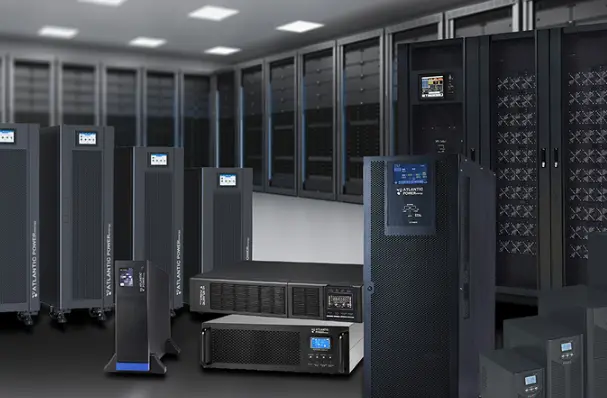
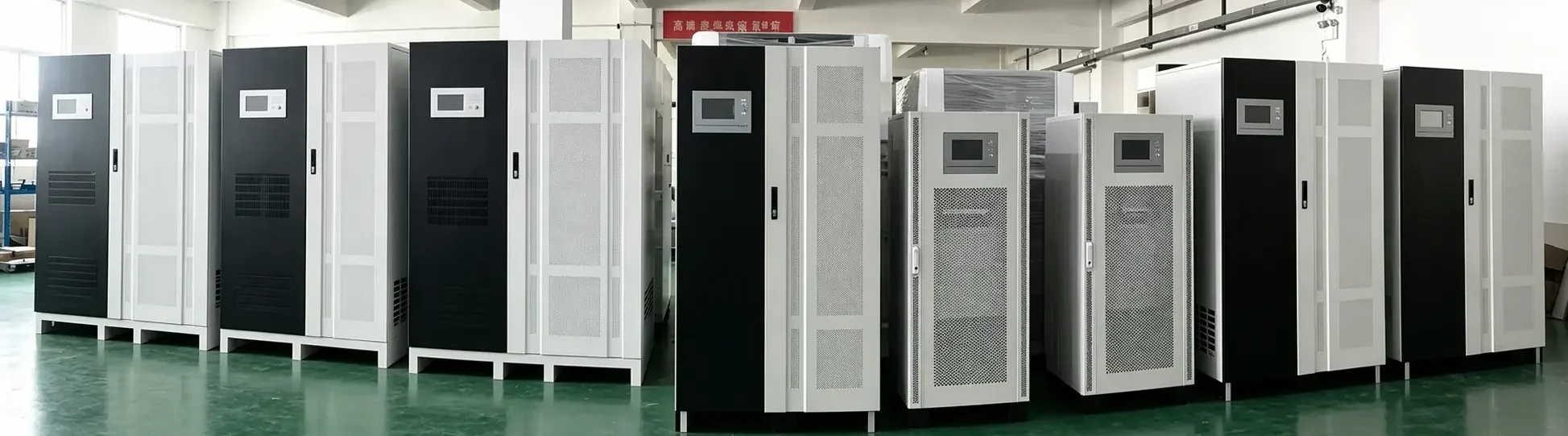
An uninterruptible power supply, commonly called a UPS, provides temporary backup power when the main utility supply fails or becomes unstable. It helps connected equipment continue operating long enough to ride through a short interruption, complete a safe shutdown, transfer to generator power, or maintain essential services until normal power returns.
A UPS is commonly used to protect computers, servers, network devices, security systems, telecommunications equipment, medical-support equipment, industrial controls, retail terminals, and other electronics that can be damaged or disrupted by sudden power loss.
The exact level of protection depends on the UPS topology, battery capacity, connected load, and installation design.
How Does an Uninterruptible Power Supply Work?
A UPS normally receives electricity from the utility supply and delivers conditioned power to connected equipment. It also maintains a battery system that can provide backup energy during an outage.
When utility power is interrupted, the UPS draws energy from its batteries and continues supplying power to the load.
A UPS system typically includes:
- AC input connection
- Rectifier or charger
- Internal or external battery system
- Inverter
- Output connection
- Monitoring and alarm functions
- Bypass function on selected models
The battery does not usually provide unlimited power. Runtime depends on the actual load in watts, battery capacity, battery condition, UPS efficiency, and external battery configuration.
What Problems Can a UPS Help Protect Against?
An uninterruptible power supply can help reduce the impact of several common power problems.
Power outages
During a blackout, a UPS supplies stored battery power to connected equipment. This can prevent immediate shutdown and allow time for a controlled response.
Short power interruptions
Very brief outages can restart computers, interrupt network equipment, stop production controls, or cause communication systems to fail. A UPS can bridge many short interruptions without affecting connected devices.
Voltage drops and brownouts
Low-voltage conditions may cause sensitive equipment to malfunction, restart, or operate unreliably. Some UPS systems can help correct or manage voltage fluctuations within their design range.
Voltage surges and electrical disturbances
Power disturbances can affect electronic equipment, particularly during storms, switching events, or unstable utility conditions. UPS systems can provide a level of power conditioning, although protection requirements vary by model and application.
Data loss and unplanned shutdown
For computers, servers, storage systems, and industrial controllers, sudden shutdown can lead to lost data, file corruption, equipment errors, and recovery delays. A UPS provides time for a controlled shutdown or transfer to another power source.
What Is the Difference Between a UPS and a Battery Backup?
A battery backup is a general term for a device that provides stored energy during a power outage. An uninterruptible power supply is a more complete power-protection system.
In addition to battery backup, a UPS may provide:
- Power monitoring
- Automatic voltage regulation
- Output conditioning
- Alarm notifications
- Load protection
- Communication with connected equipment
- Controlled shutdown functions
- Battery health monitoring
- External battery expansion on selected models
Not all UPS systems provide the same features. The correct model depends on how sensitive the load is and how much downtime the application can tolerate.
Types of Uninterruptible Power Supply Systems
There are three common UPS categories.
| UPS Type | Typical Use | Main Characteristic |
|---|---|---|
| Standby UPS | PCs, home offices, basic electronics | Transfers to battery when utility power fails |
| Line-interactive UPS | Network equipment, office systems, small servers | Helps manage certain voltage variations |
| Online UPS | Servers, data rooms, industrial controls, critical loads | Provides continuous power conversion and high-level protection |
Standby UPS
A standby UPS is often used for basic desktop computers, home-office equipment, routers, and low-power electronics. It normally operates from utility power and switches to battery during an outage.
Line-interactive UPS
A line-interactive UPS is commonly used for office networks, small server rooms, security equipment, and business systems. It can help manage certain input-voltage variations without immediately using battery power.
Online UPS
An online UPS, also called a double-conversion UPS, is often selected for critical equipment. It continuously converts incoming AC power to DC and then provides regulated AC output through the inverter.
This design can help provide stronger isolation from unstable input power and is often used in data centers, telecom rooms, laboratories, medical-support environments, and industrial applications.
How Long Can a UPS Run?
UPS runtime depends on the connected load and the battery system.
A small UPS may provide only enough time to save work and shut down a computer safely. A long-runtime UPS with external battery cabinets can provide several hours or longer for selected loads.
The following factors affect runtime:
- Total load in watts
- UPS efficiency
- Internal battery capacity
- External battery capacity
- Battery age and condition
- Ambient temperature
- Power factor
- Battery chemistry
- Required safety margin
- Future equipment expansion
A larger UPS does not automatically provide longer runtime. UPS capacity determines how much load the system can support, while the battery bank determines how long the system can support that load.
What Equipment Should Be Connected to a UPS?
A UPS should normally support essential and sensitive equipment rather than every device in a building.
Common UPS loads include:
- Desktop computers and monitors
- Servers and storage systems
- Routers, switches, and firewalls
- CCTV and security systems
- Access-control equipment
- Point-of-sale terminals
- Telecommunications devices
- Industrial automation controls
- Laboratory instruments
- Medical-support systems, where professionally specified
- Emergency communication equipment
High-power equipment such as air conditioners, heaters, large motors, printers with high inrush current, welding machines, and heavy industrial machinery may require a specialized power solution. Always confirm load compatibility before connecting equipment to a UPS.
How to Choose the Right UPS
A suitable uninterruptible power supply should be selected according to the application, not only by VA rating.
Before choosing a UPS, confirm:
- Total connected load in watts
- Peak or startup load
- Required backup time
- Input and output voltage
- Single-phase or three-phase requirement
- UPS topology
- Battery type
- Need for external battery cabinets
- Installation location
- Future expansion plans
- Monitoring and communication requirements
- Service and maintenance requirements
Both watt capacity and VA capacity matter. The connected load must remain within the UPS rating, and the final design should allow enough margin for expected growth.
Does a UPS Replace a Generator?
A UPS and a generator have different roles.
A UPS provides immediate battery power with little or no interruption. A generator provides longer-duration power after it starts and stabilizes.
For extended outages, many critical facilities use both systems together. The UPS protects the load during the transfer period, while the generator supports longer operation.
For a short outage or safe shutdown, a UPS alone may be sufficient. For a long outage, a UPS with external battery cabinets or a UPS-plus-generator solution may be more appropriate.
UPS Battery Maintenance Matters
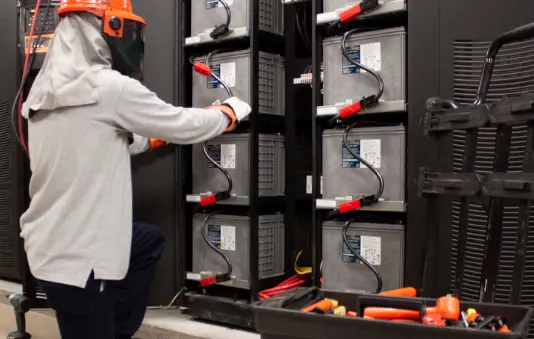
The battery system is one of the most important parts of a UPS. A UPS may appear normal during daily operation but fail to provide expected runtime if batteries are aged, damaged, disconnected, poorly maintained, or exposed to unsuitable temperatures.
Good UPS maintenance includes:
- Regular battery inspection
- Alarm review
- Periodic functional testing
- Checking battery connections
- Maintaining suitable ambient temperature
- Replacing batteries according to the maintenance plan
- Reviewing runtime after load changes
- Using compatible replacement battery modules
- Having qualified personnel service larger systems
For critical installations, battery maintenance should be part of the overall power-protection plan.
Conclusion
An uninterruptible power supply provides temporary backup power and helps protect sensitive equipment from sudden outages and certain power-quality problems.
A UPS can keep devices running long enough for a safe shutdown, a generator transfer, or continued operation during a short outage. The best system depends on load size, required runtime, power sensitivity, battery capacity, UPS topology, and future expansion needs.
For UPS selection, extended-runtime battery solutions, and project-specific power-protection support, please contact USYT UPS Power.
FAQ
What does an uninterruptible power supply do during a power outage?
It switches to battery power and continues supplying electricity to connected equipment for a limited time, based on the battery capacity and connected load.
Does a UPS protect against voltage fluctuations?
Some UPS systems can help manage voltage fluctuations, but protection level depends on the UPS topology and model.
How long will a UPS last?
Runtime depends on the load in watts, battery capacity, battery age, UPS efficiency, and whether external battery cabinets are used.
Can I connect all electrical equipment to a UPS?
No. Connect only equipment that is compatible with the UPS and within its rated watt and VA capacity. High-power loads may require a different power solution.